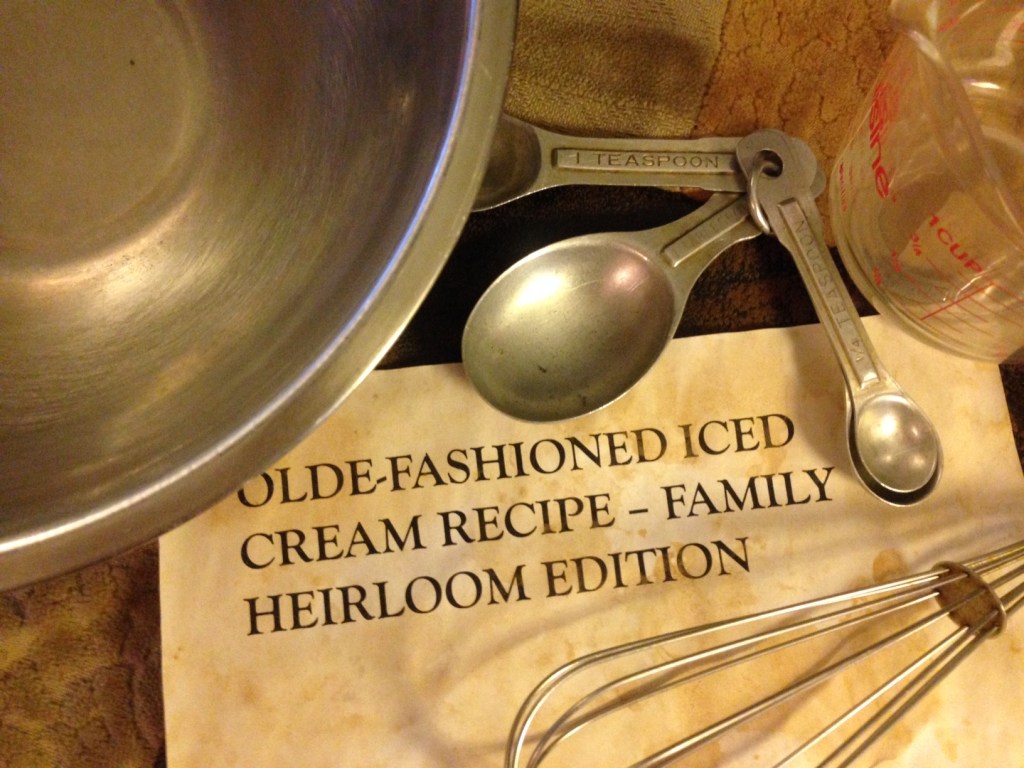
Here’s the recipe. Technically it makes vanilla ice cream, but it’s pretty odd without an extract of some kind.
2 cups homogenized milk (3%)
1 cup whipping cream (33%)
1/2 cup sugar
3 egg yolks
1 tsp vanilla
- Heat the milk and sugar together over medium low heat in a saucepan. Stir fairly frequently until the sugar is dissolved.
- While the milk mixture is heating, separate your egg yolks from your egg whites and put the yolks in a small bowl.
- When the milk/sugar mix starts to show regular wisps of steam and the sugar is fully dissolved, whisk the yolks together in the bowl, then ladle small amounts from the milk mix into the bowl with the yolks while whisking them. This brings the temperature of the yolks up gradually so they don’t scramble when you add them into the milk mix.
- When the yolk mix is ready (I usually get it to 50/50 milk/yolk), slowly pour it back into the saucepan with the milk mix while stirring. Keep stirring slowly. The milk/yolk mix is going to cook a little.
- After a while, you will feel a slight change in the mixture while you’re stirring. It will become a bit thicker. I think of it as gaining some resistance. Some say it will coat the back of a spoon, but I find that nebulous. It’s now a loose custard.
- 160 degrees Fahrenheit is the foodsafe requirement for the custard.
- Let the mixture cool slightly, then strain it into a large container.
- Add the cream and vanilla and stir.
- Let the mixture chill. Overnight is ideal. 4 hours is a good minimum.
- Get your ice cream machine ready, and add the mixture.
- Run the machine until the mixture has reached a smooth, cream consistency, with minimal visible ice crystals. My machine does this in about 20 minutes for this recipe, but it’s smart to know what you’re looking for in your ice cream rather than relying on a time. Temperatures can make a huge difference. Same with different makes and models of machines.
- Scoop out the ice cream into a freezer safe container or containers.
- Freeze immediately.
- The ice cream will be ready to scoop after about 40 minutes-1 hour in the freezer.
This recipe is only sort of mine. I’ve spent enough time on the internet to know that I’ve taken a basic concept and tweaked it until I’m happy with it, and probably did so in the exact same way as thousands of others. This is not some unique secret, and I’m not claiming to have invented anything here. As a general rule for ice creams that I make, I’m going for max creamy and not-too sweet. I’m not sold on scalding, however, which is a future post. All the ingredients I use are from the grocery store, and not from a fancy one. Nothing about the recipe is complicated, and after doing it a few dozen times, I can do it in my sleep.
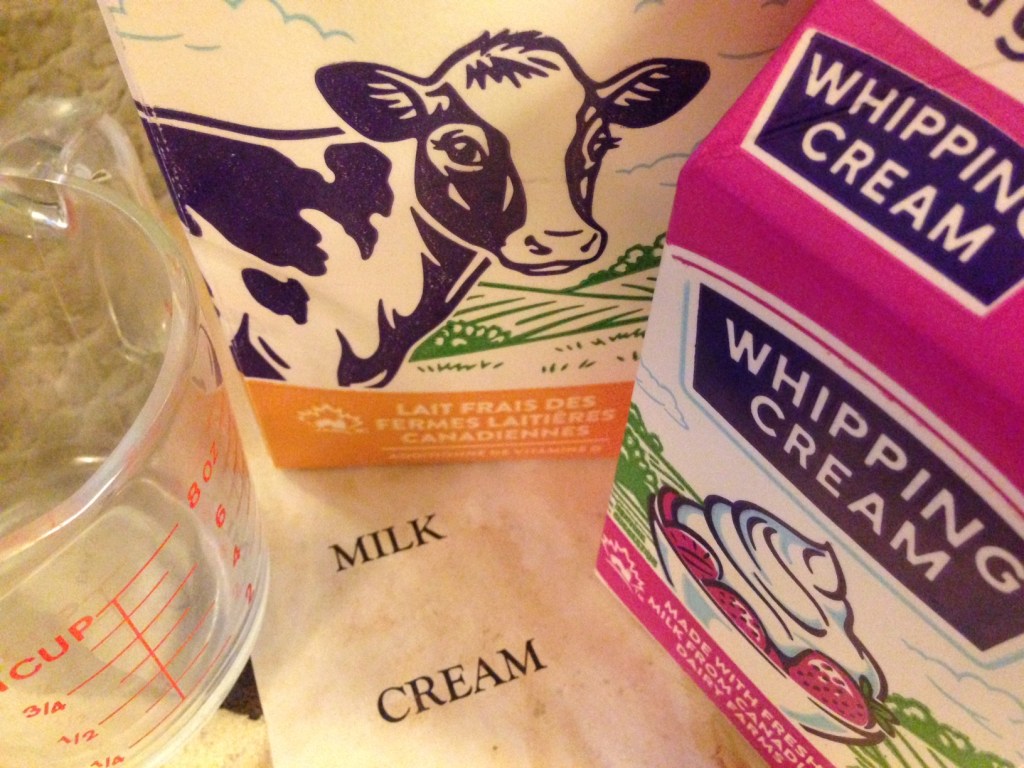
Something I will point out is a neat little trick involved with the recipe that reflects portioning and regular ice cream making. Each of the milk, cream and egg ingredients come in portions that can be broken down to make the recipe. Common sizes are a 2L jug of milk, 1L cartons of cream, and eggs in dozens. Other than the eggs, these are often the cheapest sizes available. If you look at my recipe, you’ll see that the milk, cream and eggs go into these portions four times. That is, if you buy a 2L milk, a 1L cream and a dozen eggs, you can make four batches of my recipe. You can also do it half, with a 1L milk, 500ml cream and egg sixpack.

Cost wise (for me), 4 batches of ice cream is $5 for milk, $4 for cream, $3 for eggs, and less than a dollar for the sugar and vanilla combined. That’s a whopping $13, or $3.25 or so per batch. You can probably buy a large tub of flavoured frozen goo for that in a bulk section somewhere, but no premium ice cream compares to that. A batch is around 1L, or more once you factor in things like adding cookies. A lot of premium ice creams can cost $7 or more for half of that (500ml). Can you get the costs down? Buy bigger? Absolutely.

Sugar and vanilla both keep well, can be bought in a very large size to keep costs low, and can be drawn from on a regular basis. As long as you’re keeping your milks, creams and eggs fresh and rotating, you can start to build up a nice little ice cream routine, where you’re making it often! This is also just a very basic recipe. There are uncountable ways to go with it, things to mix into it, and stuff to put on top of it. How cool is that?
 The Ice Cream Club
4 thoughts on “The Basic Recipe”