Hey out there Ice Cream Club! Another week has gone by, and I have ice cream stuff to talk about. This week I used various forms of fermentation to my advantage, and took advantage of some local ingredients. Let’s talk frozen desserts!

I started out the week by churning a pair of chocolate ice creams. I took my basic recipe and added cocoa, which is actually a new thing for me. I’ve made dozens of chocolate ice creams, but they have always been made by melting chips, bars, or discs into my custard mixture. I have the chips on hand a lot for baking, and I like that approach just fine, although I find there is often a bit of chocolate grit that is unwilling to melt, even when pushed through my strainer.
This time, however, I wanted to try cocoa. The recipe for hot chocolate on the back of the cylinder was my guideline, and I went with 1 (heaping!) tsp per cup of milk used. I had a bit of a brain cramp and forgot that I also use cream. Oops. One thing I’ve learned from making a lot of ice cream is that you want as much flavour power in your custard mix as possible because the cream is like a big wet blanket that covers a lot of it up.
Once the ice cream was churned, the flavour of chocolate was there. Present. Nice. Really nice, actually. Super smooth and even. Much less sugary. Next time I’d add an additional heaping tsp for each cup of cream used. Overall, 1 per cup dairy.
I did one batch of chocolate with standard grocery-store-brand sandwich cookies, and one with a cherry chocolate truffle bar I found on sale at the same grocery. I usually do small, single-serve ice cream portions in recycled fruit cup containers for friends and guests (cleaning and sanitizing these is way too much of my life, but it’s a labour of love), and I chunked up the bar and put a balanced amount of chunks in each portion. If I just mixed it in randomly before portioning it out, it’s likely there’d be a couple at the end with no chunks. Reviews have been very positive.
One other wrinkle with the chocolate mixes was when it came to using an extract. Typically, ice cream has vanilla in it. You can even put it in chocolate ice cream, and it tastes great. It gives the ice cream a nice, complete flavour. I don’t recommend trying it, but imagine vanilla ice cream without vanilla. There’s very little in there, but the difference it makes is gigantic. I’ve often substituted other extracts to make mint ice cream and such, and have found that liqueurs and flavoured alcohols can stand in, too. I plan on testing this further, but for my chocolate base, I used some Root Beer Schnapps from boozy float night a few weeks back. It was a fantastic add, both rounding out the flavour and giving it a touch of mystery.
Later in the week, I brought home yet another watermelon, because watermelons. I’m trying to really get nose-to-tail with these melons, and we turn them into snack portions, debris, and now strips of rind. After seeing much-celebrated pickled watermelon rind on cooking shows time and again, I finally tried it myself. Awesome. I used a flavouring that included cinnamon, clove, black pepper and rice vinegar. It was very sweet, but really interesting, and the acid helps cut through the sweet. The texture is like a juicy, floppy pickle slice. Really satisfying.
The watermelon debris mentioned in the previous paragraph is what I used to make the base for blueberry balsamic watermelon sorbet. I’ve used leftover fruit platter watermelon to do this too, but any fresh watermelon works. When you use a fruit that has water-rich flesh, like the melon family (including canteloupes, honeydews, etc.) and even cucumbers, as a sorbet base, it almost freezes into sorbet by itself. All I add to a base of blended watermelon is a fruit coulis, which is pretty much a sauce, or loose jam.
This time I had some blueberries from nearby Abbotsford, and while I was making a coulis out of them, had the bright idea to add a healthy splash of balsamic vinegar. The coulis, for the record, was just berries, water and sugar, and the balsamic instantly gave it a kick, a funk, and a floral mystique. It worked really well with the natively floral tones among the blueberries, and gave the whole sorbet a sophisticated feel to it. I made a double batch of the sorbet, and will be churning another today.
The ice creams (and sorbets) in my immediate future all revolve around ‘local’ ingredients. Some grow here, like the blackberries I’ve been foraging for annually for about 3 years. They’re just about ready, and this is the week I think I’ll be picking. They’ll mostly go into sorbets with watermelon, because the combo is amazing.
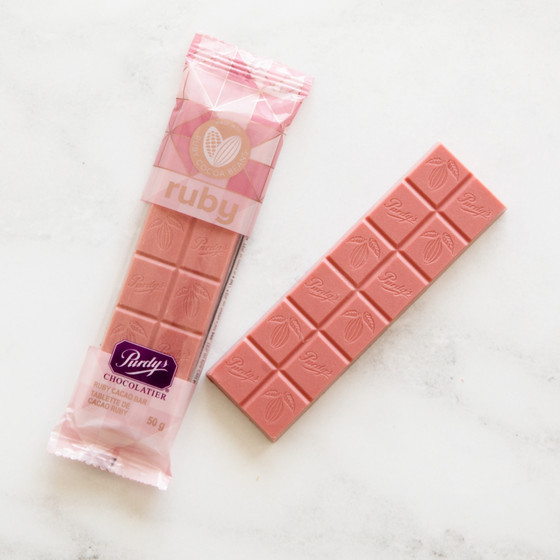
The other ‘local’ ingredient is already in my freezer. Purdy’s, a chocolate company with 2 locations in my neighbourhood, has reopened, and is selling their Ruby Chocolate again. I picked some up to try in ice cream. We tried some just for eating, and it was interesting. It tastes like chocolate-covered raisins, or even yogurt-covered raisins. I’m looking forward to reporting on things like how it melts, integrates into ice cream, and works as the primary flavour profile. Very cool. It should be a really awesome colour.
Keep cool this week, Ice Cream Club. Wearing a mask in public might mean that you can’t walk around with a cone and a couple of scoops, but it’s a small price to pay to keep healthy and safe. And you can just enjoy ice cream at home! Thanks for reading!
 The Ice Cream Club